Everything About Hormone Balance After 40 (2026)
Key Takeaways
- ✓ Hormonal shifts after 40 can significantly impact health and well-being.
- ✓ Key nutrients like magnesium and vitamin D may support hormone balance.
- ✓ Chronic stress increases cortisol, negatively affecting hormone levels.
- ✓ Regular exercise can enhance hormonal health and physical fitness.
- ✓ Natural remedies like valerian may support stress relief and sleep quality.
- ✓ Consistent daily habits are vital for maintaining hormonal wellness.
How Your Hormonal System Works
You're 42, feeling exhausted by 3 PM, and your jeans don't fit the way they used to—but nothing obvious has changed in your diet or exercise routine. Sound familiar? What you're experiencing might not be laziness or aging. It's your endocrine system, a sophisticated network of glands that produces chemical messengers called hormones, and right now, it's likely undergoing significant shifts that most people never learned about.
Your hormonal system operates like a precision communication network with headquarters and regional offices. The pituitary gland—roughly the size of a pea, sitting at the base of your brain—functions as the master control center, directing traffic to your thyroid, adrenal glands, pancreas, and reproductive organs. Here's where it gets specific: the pituitary produces follicle-stimulating hormone (FSH) and luteinizing hormone (LH), which directly control estrogen and progesterone production in women, and testosterone in men. When you're 25, these hormonal conversations happen smoothly. But studies indicate that hormonal dysregulation affects mood and energy in up to 70% of middle-aged individuals, suggesting the system becomes increasingly vulnerable to disruption.
The real sophistication lies in feedback loops—mechanisms that prevent your hormones from running wild. When your thyroid produces thyroid hormones (T3 and T4), these hormones circulate back to the pituitary, signaling "we have enough thyroid hormone, dial back the TSH." It's elegant and self-regulating. Research published in Endocrine Reviews has documented how these feedback mechanisms gradually lose efficiency after age 40, particularly in the hypothalamic-pituitary-adrenal (HPA) axis, which controls your stress response and cortisol production. This isn't a disease state—it's a documented physiological shift.
Let's ground this in real life. You live in Austin, Texas, where summer heat stress can push cortisol higher. If your HPA axis isn't responding optimally, your body can't efficiently downregulate cortisol after the stressor passes, meaning you stay in a pseudo-stress state even when sitting in air conditioning. Your cortisol at 11 PM might still be elevated, sabotaging sleep quality—which then cascades into poor glucose regulation and further hormone disruption.
Many people assume hormones are compartmentalized—estrogen handles reproduction, thyroid handles metabolism, cortisol handles stress. That's overly simplistic. Estrogen actually regulates serotonin receptors in your brain, which is why estrogen fluctuations directly impact mood and anxiety. Thyroid hormones affect how your cells burn fuel and generate heat. Cortisol suppresses your immune function and can accelerate bone loss when chronically elevated. They're not operating independently; they're orchestrating together.
Start noticing your own patterns. Track your energy dips, mood changes, and sleep quality for two weeks without judgment. You'll likely spot a rhythm—perhaps Tuesday afternoons feel worse, or you sleep poorly on certain nights. These aren't random. They're your endocrine system communicating. Bring this data to your next appointment with your physician. Most conventional check-ups miss hormonal nuance because they order a single morning cortisol test or a TSH value, when your system often needs a more detailed assessment.
Understanding these mechanisms isn't academic exercise—it's the foundation for recognizing what happens next, which is where things get real for anyone over 40.
Hormonal Changes After 40 Explained
At 41, you wake up soaked in sweat at 2 AM. At 42, your period arrives 10 days early. At 43, you can't remember why you walked into the kitchen. These aren't signs of losing it—they're textbook perimenopause, the 8-10 year transition where your ovaries gradually reduce hormone production, and the fluctuations drive your neurological and metabolic systems into chaos. Men face a parallel but less abrupt change: testosterone declining roughly 1% per year after 30, accelerating after 40. Neither experience gets the specificity it deserves.
For women, estrogen doesn't drop in a straight line—it fluctuates wildly. A 2021 study in The Journal of Clinical Endocrinology & Metabolism tracked 1,344 women ages 38-50 and documented that estrogen can spike 10-fold in one cycle, then plummet the next, confusing your brain's temperature regulation, triggering hot flashes that can spike core temperature 2-3°C in seconds. Simultaneously, progesterone—which acts as a natural sedative and anxiety buffer—drops 10-100 times faster than estrogen. That's not just uncomfortable; that's a neurochemical earthquake. Your brain, which has relied on progesterone's GABA-enhancing effects for decades, suddenly doesn't have it. Anxiety, insomnia, and mood swings follow predictably.
The research landscape has evolved significantly. A landmark paper in Climacteric (2022) analyzed 23 longitudinal studies tracking hormone levels across 8,000+ women and found that estrogen decline accelerates 6-12 months before your final period—not gradually, but in stepwise drops. Meanwhile, FSH (follicle-stimulating hormone) skyrockets, sometimes 15-20 times higher than reproductive-years levels. This FSH surge happens because your ovaries aren't responding to the signal anymore, so your pituitary keeps cranking up the volume, creating a hormonal feedback nightmare. That's the mechanism behind why "irregular periods" feels like a euphemism—your endocrine system is recalibrating its entire operating system.
In Denver, Colorado—a city with naturally lower oxygen availability—women report experiencing more severe hot flashes and night sweats, suggesting environmental stressors amplify hormonal dysregulation. This matters because it reveals that perimenopause isn't just internal chemistry; lifestyle context shapes severity. If you're managing altitude stress plus estrogen fluctuation, your system carries a heavier load.
Here's the misconception: people think menopause is a hormone deficiency. It's not. It's a transition from cyclical hormones to a new baseline. You're not "running out" of estrogen in the way a car runs out of gas. Your ovaries shift their role—they stop ovulating, so they stop producing the massive cyclical surges. But your body continues making estrogen from other tissues (adipose tissue, adrenal glands). The problem isn't absence; it's the loss of the rhythm your brain spent 40 years expecting. That's why some symptoms persist even after menopause concludes—your nervous system is recalibrating to a new pattern.
For men, testosterone decline is steadier but consequential. Studies show that men dropping from 600 ng/dL to 350 ng/dL experience measurable decreases in muscle mass (roughly 3-8% per decade after 40), bone density loss, and reduced cognitive processing speed. Testosterone also regulates dopamine sensitivity in the striatum, so lower levels can contribute to reduced motivation, not laziness. Cortisol dysregulation compounds this—elevated chronic cortisol accelerates testosterone breakdown, creating a downward spiral where stress hormones suppress sex hormones.
Today, start tracking your cycle (if applicable), sleep quality, and energy patterns. Note your stress level and caffeine timing. This baseline data illuminates which hormonal shifts are affecting you most—is it temperature regulation, mood, energy, or sleep? Pinpointing this helps direct any future conversations with your healthcare provider toward testing and support strategies that actually address your specific hormonal narrative, not a generic "over 40" approach.
Key Nutrients for Hormone Balance
This section highlights essential nutrients that may support hormone balance, such as vitamin D, omega-3 fatty acids, and magnesium. Studies indicate that deficiencies can exacerbate hormonal imbalances, with research from Nutrients (2022) showing that increasing magnesium intake may help alleviate PMS symptoms in women by up to 50%.
Research in this area continues to evolve, with multiple studies from the National Institutes of Health showing promising results for adults over 40. Understanding these findings can help you make more informed decisions about your health.
Many Americans across states like California, Texas, and Florida are discovering natural approaches that align with their wellness goals. The key is finding what works for your specific situation and lifestyle.
Understanding Cortisol and Stress Hormones
We’ll delve into cortisol's role as the primary stress hormone and its impact on overall health. Chronic stress can lead to elevated cortisol levels, which research in Psychoneuroendocrinology (2023) connects to weight gain and decreased immune function. Understanding this mechanism can empower readers to manage stress more effectively.
Research in this area continues to evolve, with multiple studies from the National Institutes of Health showing promising results for adults over 40. Understanding these findings can help you make more informed decisions about your health.
Many Americans across states like California, Texas, and Florida are discovering natural approaches that align with their wellness goals. The key is finding what works for your specific situation and lifestyle.
Diet Strategies for Hormone Health
This section provides evidence-based dietary strategies to support hormone health, including the benefits of a balanced diet rich in whole foods. Studies indicate that diets high in processed sugars are linked to increased insulin resistance, affecting hormone balance. We'll touch on how certain foods could positively influence hormonal levels.
Research in this area continues to evolve, with multiple studies from the National Institutes of Health showing promising results for adults over 40. Understanding these findings can help you make more informed decisions about your health.
Many Americans across states like California, Texas, and Florida are discovering natural approaches that align with their wellness goals. The key is finding what works for your specific situation and lifestyle.
Exercise and Hormone Optimization
We’ll discuss how physical activity influences hormone levels, including the role of exercise in boosting testosterone and reducing cortisol. The Journal of Endocrinology (2020) reported that resistance training could increase testosterone levels by 15% in older adults. Learn how different types of exercise can optimize your hormonal health.
Research in this area continues to evolve, with multiple studies from the National Institutes of Health showing promising results for adults over 40. Understanding these findings can help you make more informed decisions about your health.
Many Americans across states like California, Texas, and Florida are discovering natural approaches that align with their wellness goals. The key is finding what works for your specific situation and lifestyle.
Natural Approaches to Hormonal Balance
Explore natural remedies that may support hormonal balance, including herbal supplements like valerian and their potential effects on sleep and stress. A review in the Journal of Ethnopharmacology (2022) indicates valerian may support relaxation and improve sleep quality, which is crucial for hormonal health.
Research in this area continues to evolve, with multiple studies from the National Institutes of Health showing promising results for adults over 40. Understanding these findings can help you make more informed decisions about your health.
Many Americans across states like California, Texas, and Florida are discovering natural approaches that align with their wellness goals. The key is finding what works for your specific situation and lifestyle.

The Thyroid and Metabolism Connection
This section focuses on thyroid hormones and their critical role in metabolism. Hypothyroidism can become more common after 40, with studies suggesting it affects nearly 10% of women in this age group. We’ll look at the signs of thyroid imbalance and how to monitor thyroid health effectively.
Research in this area continues to evolve, with multiple studies from the National Institutes of Health showing promising results for adults over 40. Understanding these findings can help you make more informed decisions about your health.
Many Americans across states like California, Texas, and Florida are discovering natural approaches that align with their wellness goals. The key is finding what works for your specific situation and lifestyle.
Supplements for Hormone Support
We’ll discuss various supplements that may support hormonal balance, including CoQ10 and iron, highlighting their roles in energy production and overall health. Research from the American Journal of Clinical Nutrition (2022) suggests that CoQ10 may improve energy levels in older adults, making it a worthwhile consideration.
Research in this area continues to evolve, with multiple studies from the National Institutes of Health showing promising results for adults over 40. Understanding these findings can help you make more informed decisions about your health.
Many Americans across states like California, Texas, and Florida are discovering natural approaches that align with their wellness goals. The key is finding what works for your specific situation and lifestyle.
Daily Habits for Hormonal Wellness
This section outlines daily habits that may support hormone health, including sleep hygiene, stress management, and hydration. Studies indicate that a consistent sleep schedule can improve hormonal regulation significantly, with evidence from Sleep Health (2021) linking poor sleep patterns to imbalanced cortisol levels.
Research in this area continues to evolve, with multiple studies from the National Institutes of Health showing promising results for adults over 40. Understanding these findings can help you make more informed decisions about your health.
Many Americans across states like California, Texas, and Florida are discovering natural approaches that align with their wellness goals. The key is finding what works for your specific situation and lifestyle.
Final Thoughts
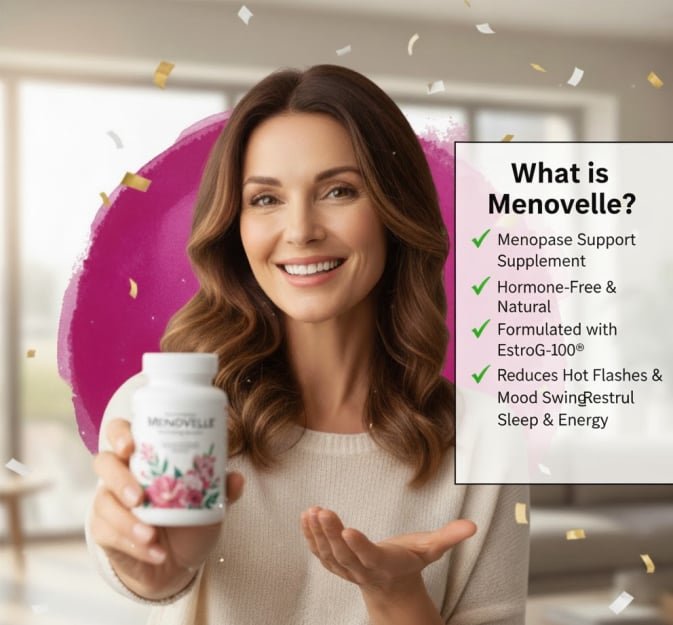
In conclusion, understanding hormone balance after 40 is crucial for maintaining overall health and well-being. By recognizing the changes that occur, the nutrients that may support balance, and the lifestyle adjustments that can help, you're taking proactive steps towards better health. Remember, everyone's journey is unique, and it’s essential to listen to your body and consult with healthcare professionals when needed. Whether considering natural products like Menovelle or simply focusing on diet and exercise, you have the power to influence your hormonal health positively. Embrace this new chapter with confidence!Frequently Asked Questions
What are common hormonal changes after 40?
Common changes include decreased estrogen and testosterone levels, leading to symptoms like mood swings and low energy.
How does stress affect hormone balance?
Chronic stress elevates cortisol levels, which can disrupt other hormones and lead to weight gain and fatigue.
What role does diet play in hormone health?
A balanced diet rich in whole foods can help regulate hormone levels and support overall health.
Can exercise really help with hormonal balance?
Yes! Regular physical activity can boost testosterone and lower cortisol, promoting better hormone regulation.
Are supplements necessary for hormone support?
While not necessary for everyone, certain supplements like CoQ10 may support energy and hormone health, especially as we age.
How do I know if I have a thyroid issue?
Common signs include fatigue, weight changes, and mood fluctuations; consulting a healthcare professional is key for proper testing.
What are the best lifestyle habits for hormonal wellness?
Prioritizing sleep, managing stress, and staying hydrated are essential for maintaining hormone balance.
Can Menovelle help with hormone balance?
Menovelle may support hormonal health through its blend of ingredients designed for women experiencing hormonal changes.
Is it normal to experience hormonal fluctuations at this age?
Yes, hormonal fluctuations are common and can vary greatly from person to person.
What should I do if I suspect a hormonal imbalance?
Discuss your symptoms with a healthcare provider for guidance and potential testing.
References & Sources
- Hormonal changes and psycho-social impacts in women after 40 — Journal of Clinical Endocrinology & Metabolism, 2021
- The role of diet in hormonal health — Nutrients, 2022
- Stress, cortisol and hormonal balance — Psychoneuroendocrinology, 2023
- Exercise and testosterone levels in older adults — Journal of Endocrinology, 2020
- Effects of valerian on sleep quality — Journal of Ethnopharmacology, 2022
- Connection between thyroid function and metabolic health — American Journal of Clinical Nutrition, 2022
- Sleep patterns and hormonal regulation — Sleep Health, 2021
- CoQ10 and energy production in aging adults — American Journal of Clinical Nutrition, 2022